
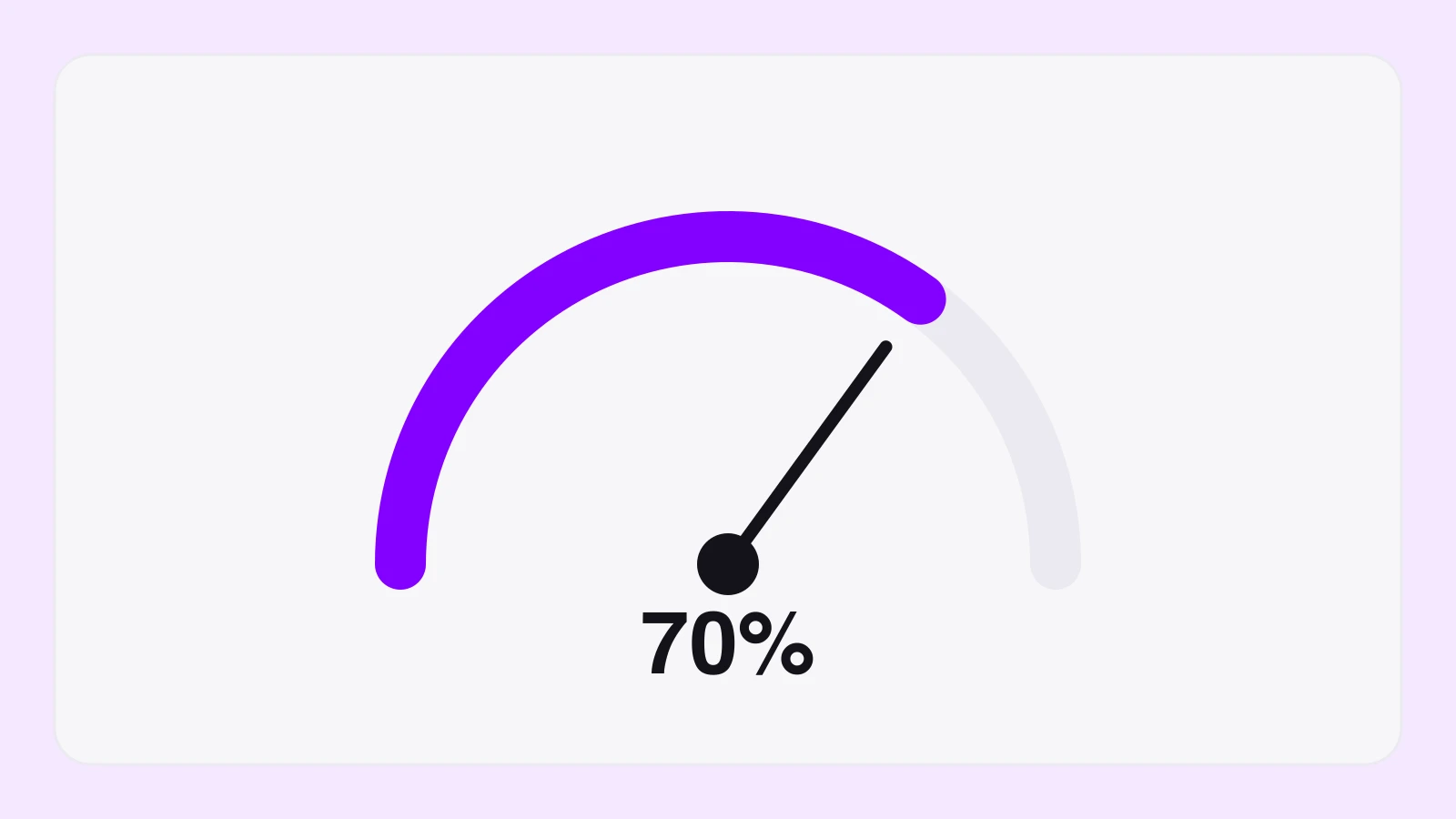
The hardest part of Leaderboard is not knowing things about the world. It is converting what you know into a number between 0 and 100.
What 70% means
Saying 70% does not mean "it will probably happen". It means: across all the times you say 70%, you expect to be right about seven in ten of them. A probability is a statement about your long-run hit rate, not about one event.
That framing has a useful consequence: you can be right to say 70% about an event that does not happen. One miss proves nothing. A pattern of misses does: if your 70%s only come true half the time, the number you should have been writing was 50%.
Translating a hunch
A rough ladder, from forecasting practice:
- 50% - a coin flip. You genuinely cannot tell. This is an honest and safe answer.
- 60-65% - you lean one way, but would not be surprised to be wrong.
- 70-80% - you would bet on it at even odds and feel good about it.
- 85-95% - you would be surprised if it went the other way.
- 99% - you would be shocked. Reserve this for near-certainties; the scoring rule punishes misplaced confidence at the edges hard.
Two habits sharpen the ladder fast. First, ask the outside question before the inside one: how often do things like this happen at all, before your read on this particular case? Second, write down why you chose the number. When the event resolves, the note tells you whether you were right for the right reason.
The track record is the point
Your profile keeps your resolved calls as a public track record. Over a full tournament, that record is a calibration curve in disguise: it shows whether your 80s were really 80s. Nobody's are, at first. The players at the top of the standings are the ones who noticed, and adjusted.